Learning is often spoken about as something abstract—information going in, understanding coming out. But
in reality, learning is a physical process. Each time a
student learns something new,
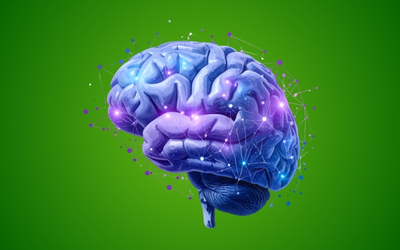
the brain changes
in small but meaningful ways.
At the centre of this process are neurons, specialised cells
that communicate with one
another. Neurons
connect through junctions called synapses, forming networks
that allow signals to
travel through the
brain. Learning happens when these connections are created, strengthened, or reorganised.
When a student encounters a new idea for the first time, the brain begins forming a new neural
pathway.
At this stage, the pathway is weak. Signals can travel along it, but inefficiently. The connection
exists, but it's unstable and easy to lose.
A helpful way to understand this is to imagine the brain as a landscape.
Learning something new is like walking through an overgrown
field for the first time.
You can get from
one side to the other, but the route is unclear. Grass is tall, footing is uneven, and it takes effort
to find the way. The path exists—but only just.
Each time the student revisits the idea—by thinking about it, recalling it, or using it—the brain sends
signals along the same route again. With repeated use, the grass begins to flatten. The path becomes
clearer. Over time, it turns into a dirt road.
This is how neural pathways are strengthened.
As a pathway is used more often, the connections between neurons become more efficient. Signals travel
faster. Less effort is required. The brain begins to favour this route because it conserves energy. With
continued reinforcement, the dirt road becomes a paved road—smooth, reliable, and easy to travel.
The reverse is also true. When a neural pathway isn't used, the brain gradually weakens it. The
grass
grows back. The road narrows. Eventually, it becomes difficult to find again. This isn't
failure—it's
the brain being efficient, reallocating resources to pathways that are used more often.
This explains a common experience in learning: “I understood this when
it was taught in class,
but now
it feels unfamiliar.”
Learning, then, is not about creating a pathway once. It's about strengthening and
maintaining
pathways
over time. The brain is constantly adapting—reinforcing connections that are used and
pruning those that
are not. That's why, how we engage with knowledge over time becomes crucial.
#7
Does Learning Change the Brain?
January 20, 2026